People Powered AI: How CJ Fitos of FEMCO is scaling care, community and impact.
CJ and Femco: A Digital Skills Program case study.
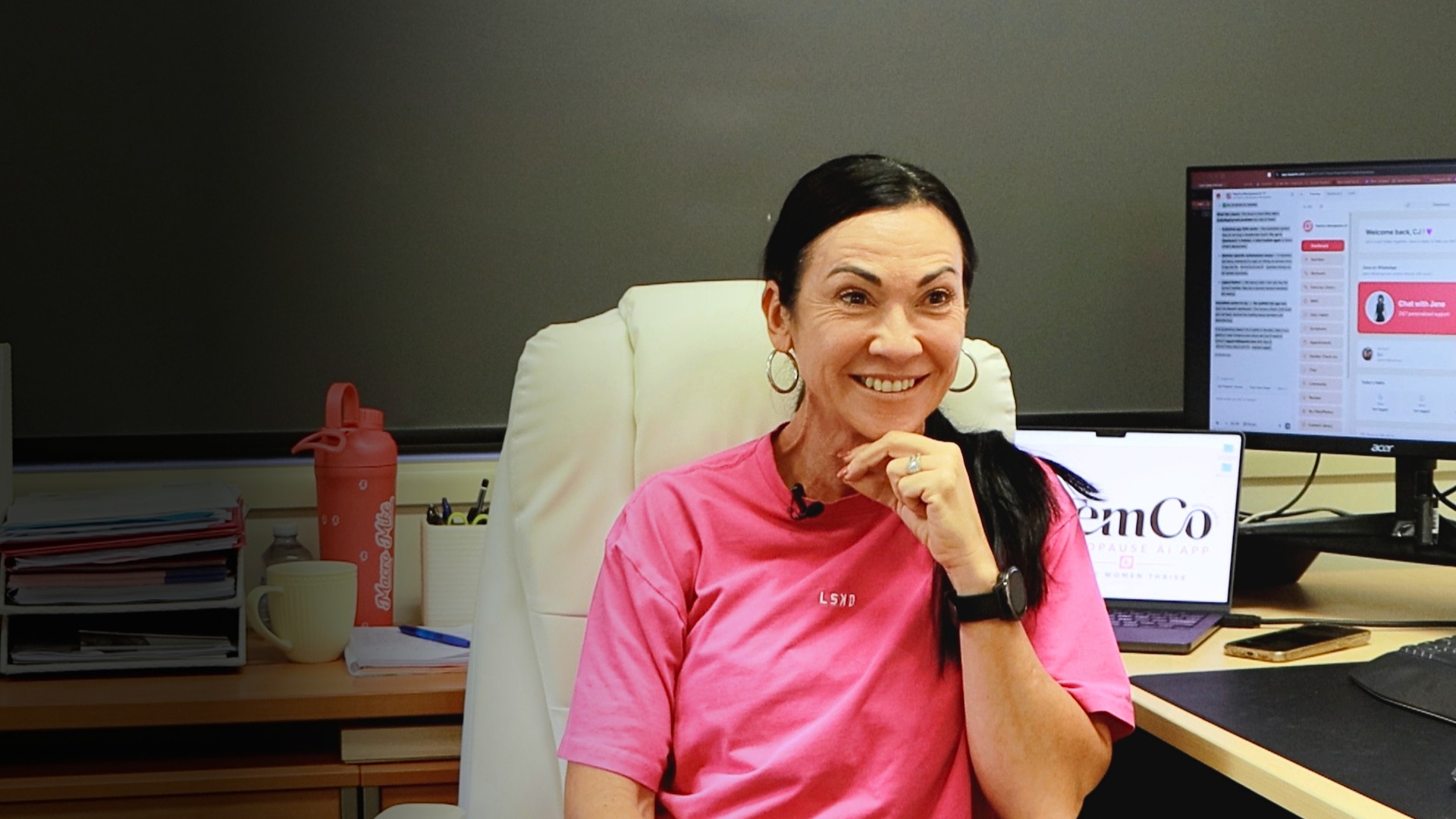
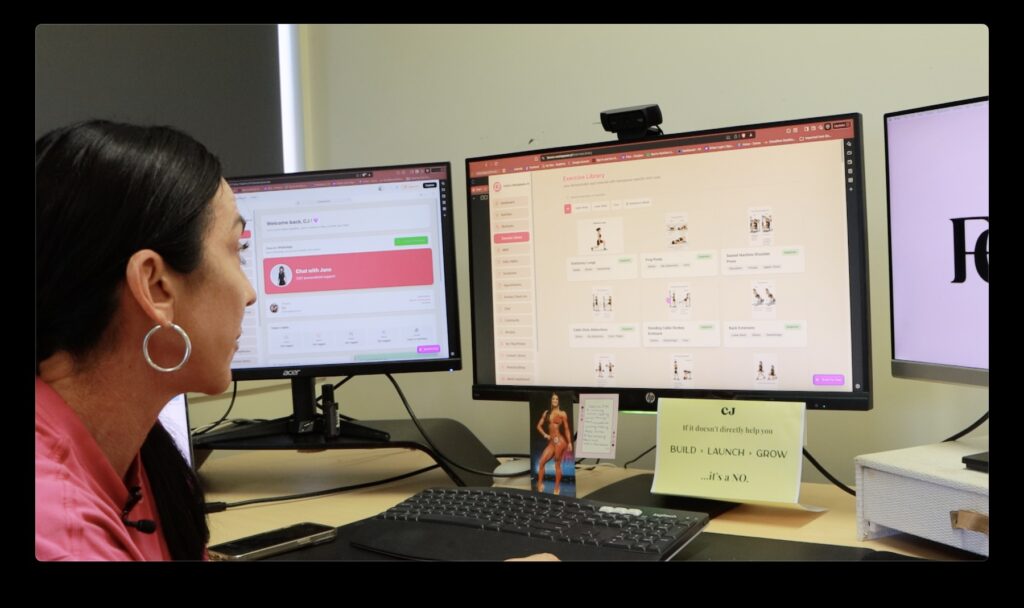
When CJ Fitos, Founder of FEMCO, began building Jane – FEMCO’s menopause AI guide – it marked a fundamental shift in how her business could grow and how many women she could support.
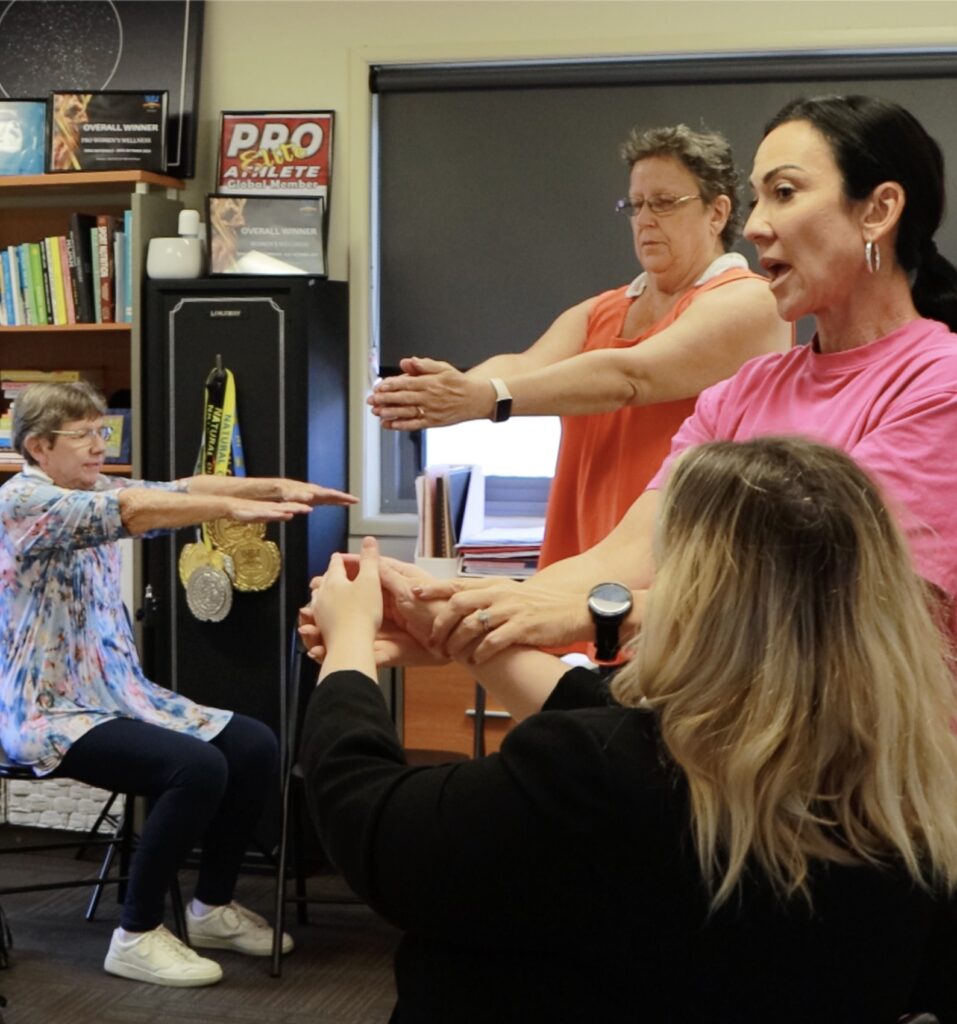
For years, CJ’s work had been deeply personal, hands‑on and time‑intensive. But that same care‑driven approach also placed natural limits on her capacity.
“As a coach, I could only coach a certain number of women and give them my attention that they deserve. After that number, the cracks would start.”
CJ knew the need was bigger than what she alone could meet.
“I wanted to help everybody, but because there was only a bracket of women that I could help, I wanted to do better here.”
Jane emerged from that tension not as a replacement for human care, but to extend it. CJ began asking herself a different kind of question.
“What about if I could create something that was affordable, something that was highly scalable, something that had 24/7 support and something that had real life impact?”
The idea wasn’t driven by technology trends. It was grounded in lived experience, community need and CJ’s desire to support women when traditional systems weren’t available.
“There would be times I couldn’t sleep… I wanted to talk to someone and there was no one to talk to.”
“That’s where Jane helps – you can have that conversation any time, day or night.”
What makes CJ’s story particularly powerful is where it began. Her digital journey didn’t start with technical confidence.
“When I decided to start an online business, even something as simple as Google Drive – yeah, I was lost.”
Like many small business owners in regional Australia, CJ had years of experience and insight, but limited confidence navigating digital tools. That began to change through her participation in the Greater Digital Skills Program, where she took part in face‑to‑face masterclasses, online learning, and one‑on‑one digital transformation coaching. What stood out most for CJ wasn’t learning a specific platform — it was learning how to think critically about technology.
“Understanding AI, understanding how to prompt AI, and understanding how AI can work for you – that’s where the growth happened.”
Importantly, CJ never saw AI as something that should make decisions for her.
“AI didn’t give me the answers. It gave me the ability to ask better questions.”
That mindset – human‑led, intentional and reflective shaped how FEMCO would use AI from the beginning. CJ began using AI to translate years of lived experience into structured, accessible support.
“AI taught me how to extract what was in my head and bring it to life.”
Jane became FEMCO’s first AI “worker” — a system designed to support access, availability and scale, while remaining grounded in human oversight and values. CJ is clear about her role in that process.
“I’m not a coder. I’m not a developer, but I could still build this.”
To make sense of FEMCO’s growing digital ecosystem, CJ often returns to language she understands.
“I go back to bricks‑and‑mortar business because that’s what I know.”
She describes her platform in simple, tangible terms.
“There’s the workshop where I build things using AI, the control centre where I run the business, and the shopfront where customers come in and use the app.”
This way of thinking allowed CJ to take ownership of her digital systems and demystify technology not just for herself, but for other business owners navigating similar transitions. Before FEMCO’s digital shift, CJ’s work was locked to her calendar.
“As a coach, I could only help so many women.”
She didn’t want scale at the expense of care, but she knew the traditional service model wasn’t sustainable.
“I wanted something affordable, scalable, 24/7 support not dependent on appointments.”
Through digital skills and AI, FEMCO was able to move beyond time‑based services and into a model that supports women continuously, without requiring additional staff or longer hours. CJ’s work also challenges the idea that innovation belongs only in big cities or technology hubs. FEMCO has been built in regional Australia, grounded in community, lived experience and purpose.
“Don’t wait until it’s perfect just do it.”
That approach characterised by experimentation, critical thinking and reflection defines her journey.
“Your mistakes aren’t failures. They’re your biggest tools.”
CJ’s message for other small business owners is clear – “AI only works when people lead.”
Watch the story
Her story reflects what’s possible when regional businesses are supported to build confidence, think critically, and use technology intentionally not as an end, but as a tool for care, connection and community good. She remains clear that AI must be shaped, guided and reviewed by people.
“AI didn’t give me the answers.” For CJ, AI workers handle access and availability while humans remain responsible for judgement, values and direction.
What CJ Means by “AI team members ”
CJ describes tools like Jane as AI team members — not decision‑makers.
In her words, AI supports the business by:
Helping get ideas “out of my head and bring it to life”
Being available “any time, day or night”
Supporting scale without replacing human care
Greater
Decarbonisation
The region’s vision for decarbonisation is as aspirational as it is audacious.
Engaging in road advocacy, election priorities, and funding opportunities, GW3 aims to amplify our region’s voice and ensure that critical projects receive the attention and funding they deserve.
When CJ Fitos, Founder of FEMCO, began building Jane – FEMCO’s menopause AI guide – it marked a fundamental shift in how her business could grow and how many women she could support.
For years, CJ’s work had been deeply personal, hands‑on and time‑intensive. But that same care‑driven approach also placed natural limits on her capacity.
“As a coach, I could only coach a certain number of women and give them my attention that they deserve. After that number, the cracks would start.”
CJ knew the need was bigger than what she alone could meet.
“I wanted to help everybody, but because there was only a bracket of women that I could help, I wanted to do better here.”
Jane emerged from that tension not as a replacement for human care, but to extend it. CJ began asking herself a different kind of question.
“What about if I could create something that was affordable, something that was highly scalable, something that had 24/7 support and something that had real life impact?”
The idea wasn’t driven by technology trends. It was grounded in lived experience, community need and CJ’s desire to support women when traditional systems weren’t available.
“There would be times I couldn’t sleep… I wanted to talk to someone and there was no one to talk to.”
“That’s where Jane helps – you can have that conversation any time, day or night.”
What makes CJ’s story particularly powerful is where it began. Her digital journey didn’t start with technical confidence.
“When I decided to start an online business, even something as simple as Google Drive – yeah, I was lost.”
Like many small business owners in regional Australia, CJ had years of experience and insight, but limited confidence navigating digital tools. That began to change through her participation in the Greater Digital Skills Program, where she took part in face‑to‑face masterclasses, online learning, and one‑on‑one digital transformation coaching. What stood out most for CJ wasn’t learning a specific platform — it was learning how to think critically about technology.
“Understanding AI, understanding how to prompt AI, and understanding how AI can work for you – that’s where the growth happened.”
Importantly, CJ never saw AI as something that should make decisions for her.
“AI didn’t give me the answers. It gave me the ability to ask better questions.”
That mindset – human‑led, intentional and reflective shaped how FEMCO would use AI from the beginning. CJ began using AI to translate years of lived experience into structured, accessible support.
“AI taught me how to extract what was in my head and bring it to life.”
Jane became FEMCO’s first AI “worker” — a system designed to support access, availability and scale, while remaining grounded in human oversight and values. CJ is clear about her role in that process.
“I’m not a coder. I’m not a developer, but I could still build this.”
To make sense of FEMCO’s growing digital ecosystem, CJ often returns to language she understands.
“I go back to bricks‑and‑mortar business because that’s what I know.”
She describes her platform in simple, tangible terms.
“There’s the workshop where I build things using AI, the control centre where I run the business, and the shopfront where customers come in and use the app.”
This way of thinking allowed CJ to take ownership of her digital systems and demystify technology not just for herself, but for other business owners navigating similar transitions. Before FEMCO’s digital shift, CJ’s work was locked to her calendar.
“As a coach, I could only help so many women.”
She didn’t want scale at the expense of care, but she knew the traditional service model wasn’t sustainable.
“I wanted something affordable, scalable, 24/7 support not dependent on appointments.”
Through digital skills and AI, FEMCO was able to move beyond time‑based services and into a model that supports women continuously, without requiring additional staff or longer hours. CJ’s work also challenges the idea that innovation belongs only in big cities or technology hubs. FEMCO has been built in regional Australia, grounded in community, lived experience and purpose.
“Don’t wait until it’s perfect just do it.”
That approach characterised by experimentation, critical thinking and reflection defines her journey.
“Your mistakes aren’t failures. They’re your biggest tools.”
CJ’s message for other small business owners is clear – “AI only works when people lead.”
Watch the story
Her story reflects what’s possible when regional businesses are supported to build confidence, think critically, and use technology intentionally not as an end, but as a tool for care, connection and community good. She remains clear that AI must be shaped, guided and reviewed by people.
“AI didn’t give me the answers.” For CJ, AI workers handle access and availability while humans remain responsible for judgement, values and direction.
What CJ Means by “AI team members ”
CJ describes tools like Jane as AI team members — not decision‑makers.
In her words, AI supports the business by:
Helping get ideas “out of my head and bring it to life”